


A Digital Transformation for the Holocaust Center for Humanity
Posted
09.16.2026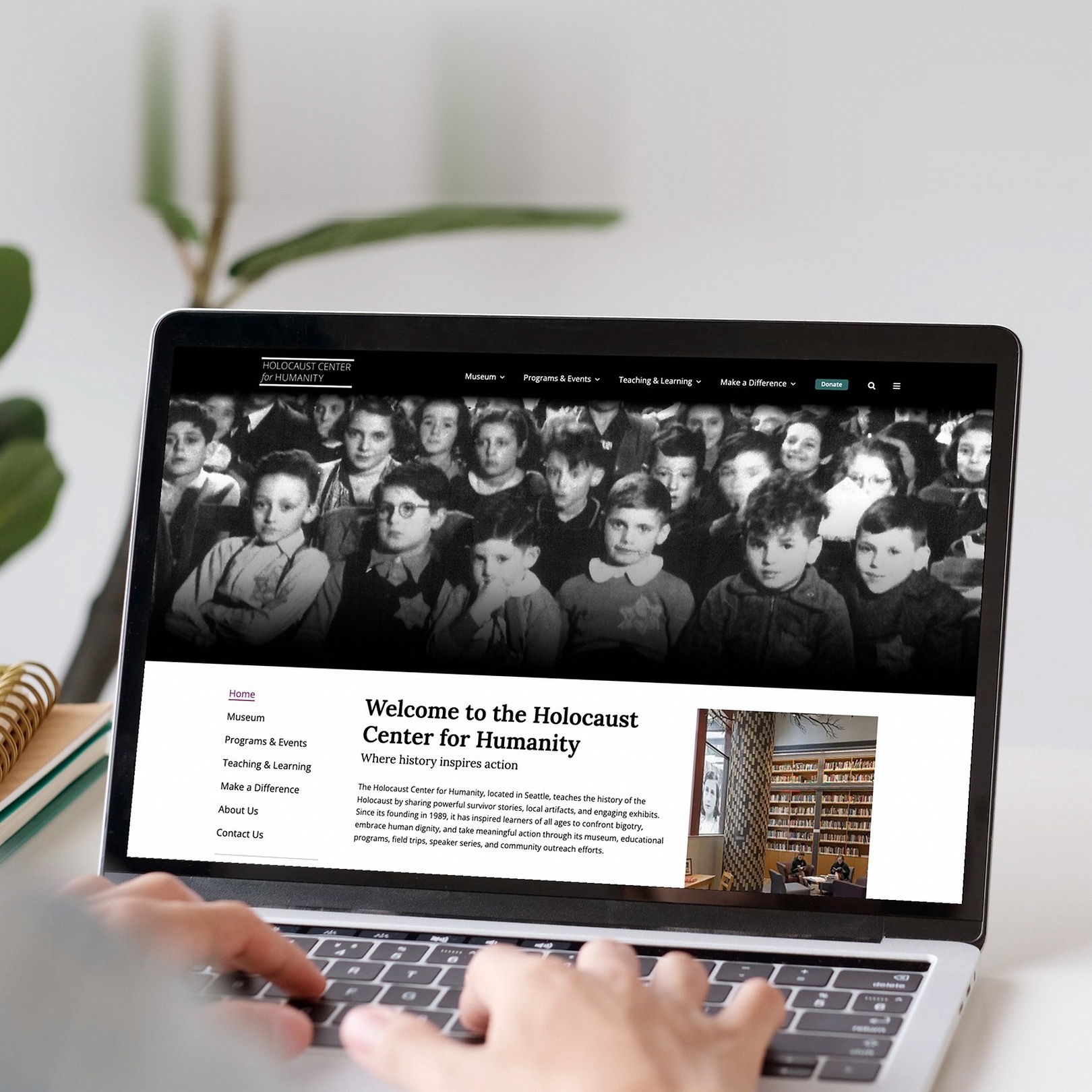
How We Turned 18 Years of Content Into One Clear Story for the Holocaust Center for Humanity
Every nonprofit website starts with good intentions. A new program launches, so a page gets added. An event needs a signup form, so another tool gets plugged in. Over time those pages pile up, and a site that once worked starts to get in the way of the mission.
That’s where the Holocaust Center for Humanity was when they came to us. Founded in Seattle in 1989, the organization shares survivor stories, local artifacts, and powerful exhibits with learners across Washington State and beyond. Its website had grown alongside it for nearly two decades. Over 18 months, Jennergy partnered with their team on a full digital transformation, from brand strategy and content strategy through design, development, and a new email template system.
Here’s what we learned along the way, and what any mission-driven organization can take from it.
What does a nonprofit digital transformation actually involve?
It’s more than a new look. For the Holocaust Center for Humanity, the work covered a website audit, UX and content strategy, user journey mapping, a brand refresh, custom WordPress design and development, and branded email templates for their Neon platform. Each piece was built to work with the others, so the brand feels the same from the homepage to the inbox.
Start with an audit, not a redesign
Before we touched a single design, we looked at how people were really using the site. Google Analytics data showed us which pages visitors valued, which ones were outdated or redundant, and where people got lost. That audit became the roadmap for everything that followed. It also made tough content decisions easier, because they were based on data and not guesswork.
Organize around your audiences
The Holocaust Center for Humanity serves a lot of people with very different needs. Educators plan field trips and look for lesson plans. Students do research. Families plan museum visits. Donors want a clear way to give. We mapped a journey for each group and rebuilt the site around five simple pathways: Museum, Programs & Events, Teaching & Learning, Make a Difference, and Donate. Now each visitor has a direct route to what they came for.
Let the story lead
The most powerful thing the Holocaust Center for Humanity has to offer is its story. On the old site, survivor voices and local history were buried under layers of pages. We brought them to the surface with strong imagery, survivor testimony, and messaging that moves people from learning to action. For any nonprofit, your story is your strongest asset. Your website should put it front and center.
Build accessibility in from day one
Accessibility can’t be an afterthought, especially for an education organization. We followed WCAG and ADA standards from the first wireframe through launch, so every visitor can use the site. Designing this way from the start is also easier and cheaper than fixing it later.
Get found by search engines and AI
People don’t just search Google anymore. They ask AI tools and read AI overviews. We optimized the Holocaust Center for Humanity website for SEO and structured the content so AI tools and LLM-based search can understand it and surface it. When someone asks where to learn about Holocaust history in Seattle, the site is ready to be the answer.
Make it easy for your team to manage
A great website only stays great if your team can keep it current. We built flexible WordPress templates for events, exhibits, press, and landing pages, then trained staff with a live session and short video tutorials. The team now updates content on their own, without calling a developer for every change.
Carry the brand beyond the website
After launch, we kept going. The refreshed brand now carries into the Holocaust Center for Humanity’s email marketing through a branded template system for newsletters, event invitations, and donor campaigns. Staff can build polished, on-brand emails quickly, and every touchpoint feels connected.
The results
The Holocaust Center for Humanity now has a website that feels as meaningful as its mission. Educators find resources in a few clicks. Families can plan a visit with ease. Donors have a clear path to give. And the site keeps growing its reach across Google, AI overviews, and LLM search.
Ilana Cone Kennedy, CEO of the Holocaust Center for Humanity, put it this way: “What felt overwhelming at the start became a collaborative and well-managed process because of their expertise. I recommend Jennergy without hesitation to any organization looking for a first-class team that delivers both an exceptional process and an exceptional final product.”
See the full project
Want to see how it all came together? View the full Holocaust Center for Humanity case study or visit the live site at holocaustcenterseattle.org.
If your organization’s website has outgrown its structure, we’d love to help. Contact Jennergy to start the conversation.